


Some issues are simply basically a part of American tradition. Baseball. Apple pie. Catchy advert campaigns. And small-block Chevrolets.
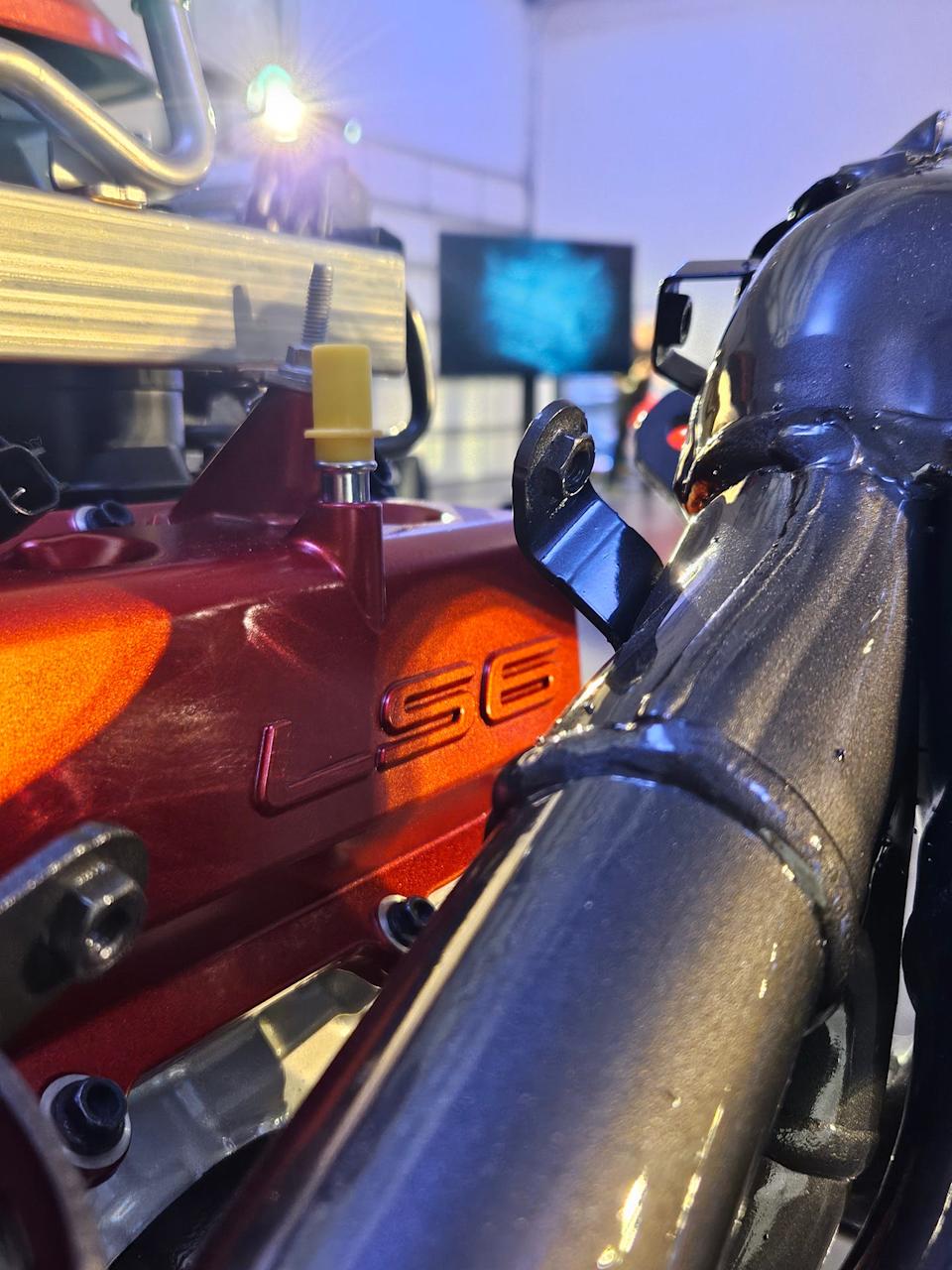
For less than the sixth time for the reason that small-block arrived contained in the Corvette again in 1955, Common Motors has introduced a completely new small-block V-8. Generally known as the LS6, this new 6.7-liter unit completely blends the small block method of yesteryear with the model’s most recent tech to create a really potent monster worthy of the LS moniker. So, Highway & Monitor sat down with GM assistant chief engineer for small-block engines Mike Kociba to attain a greater understanding of what precisely makes this new V-8 so potent, and why GM determined to resurrect an outdated title for a brand new engine.
For these preserving rating at residence, this isn’t the primary time that GM has used the moniker of “LS6” on a Corvette V-8. The primary was a big-block engine launched in 1970, measuring in at a whopping 454 cubic inches; it was the most important engine ever put in in a Corvette. The primary small-block to don the LS6 nameplate arrived in 2001 contained in the C5-generation Corvette Z06. Largely only a worked-over LS1, the 5.7-liter V-8 produced as much as 405 hp in Corvette trim. This new LS6, which measures in at 6.7 liters (or in phrases Brian Wilson may choose, 409 cubic inches), occurs to fit proper between the 2 engines by way of displacement. That isn’t precisely an accident, in line with GM.
Lucas Bell
Upping the displacement over the Stingray and E-Ray’s earlier 6.2-liter V-8 wasn’t only for efficiency, nevertheless. The group discovered that the 6.7-liter supplied the group fewer compromises when it got here to emissions and gas economic system—significantly when paired with the “Displacement on Demand” system, which was going to be essential to preserving V-8s naturally aspirated when this system was initiated. Issues might have modified a little bit since then, however the sentiment nonetheless advantages clients by way of effectivity and efficiency.

Lucas Bell
Like each small-block earlier than it, the LS6 options iconic 4.4-inch bore facilities. The engine does decide up a bigger stroke than its predecessor, now sitting at 100 mm vs 92 mm. The engine additionally picks up some old-school scorching rod bits, together with cast rods and pistons, a bigger 95 mm throttle physique, high-velocity ports for the gas system (which now runs port and direct injection) and a big tunnel ram consumption up prime. The oiling and cooling programs have been utterly reworked, with highlights like twin fundamental oil feeds for the underside finish and two-piece water jackets within the cylinder head to assist shield the valvetrain. The LS6 additionally boasts a formidable 13:1 compression ratio, larger than any small-block earlier than it—even together with the leaded gas days.
A part of why GM was in a position to push the engine to date comes all the way down to the brand new engine administration system, recognized internally as “Encantado.” The title is borrowed from Brazilian folklore, and references a shapeshifting cryptid. It’s an applicable title, because the system depends on machine studying to assist pace up testing and enhance over time. The LS6 marks the primary V-8 utility of the software program.
Lucas Bell
Because of how important all these adjustments are, GM felt prefer it was time to step away from the “LT” moniker. The model had adopted the LT nomenclature when the C8 arrived, because it helped spotlight that this wasn’t your granddad’s Corvette. Seven years later, they thought it was applicable to make that distinction as soon as extra. LS was a pure touchdown level.
“In the event you undergo small block historical past, you may see that we do use lots of RPOs,” stated Kociba. “Numerous our RPOs carry lots of heritage and join with our clients. So once you hear an LS and also you hear an LT, you recognize instantly it is a efficiency automobile.”
“Numerous our engines, we do not decide an RPO—however for small blocks, we all the time do, as a result of they imply one thing to our clients,” he added. “We needed to honor our heritage, and we needed to convey their race [pedigree] and really feel of efficiency. That is why we selected to return to LS. You could possibly additionally say, you recognize, ‘we put port gas injection again on, and Gen 4 had port gas injection,’ so there’s some synergy there. In order that’s sort of how we obtained the primary half—LS. After which the six, actually … that is the sixth technology [engine].”
“It simply felt applicable to launch this product with the LS6.”
Lucas Bell
Whereas the LS6 engine arrives within the Corvette for 2027, the structure is bound to unfold throughout the GM lineup within the coming years. Whereas it’s unlikely future pickup vans and SUVs will obtain the complete 13:1 compression ratio and tunnel ram consumption setup, it ought to nonetheless be a stable enchancment over the 6.2-liter motor at the moment on provide. (Clients will certainly welcome the brand new engine as properly, given the 6.2s aren’t precisely recognized for reliability.) I’m simply comfortable to have an LS V-8 again in the marketplace. I can’t anticipate an opportunity to check it out for myself, particularly as soon as it arrives within the Stingray for 2027.
You May Additionally Like
If You Can Solely Personal One Automobile, Make It One among These
These Are the Most Standard Automobiles by State